Don't Forget Your Head: Why Proper Head and Neck Alignment Matters During Exercise

Introduction
When people think about exercise form, they usually focus on:
their arms
their legs
their back
the amount of weight they're lifting
But there's one body part that often gets ignored:
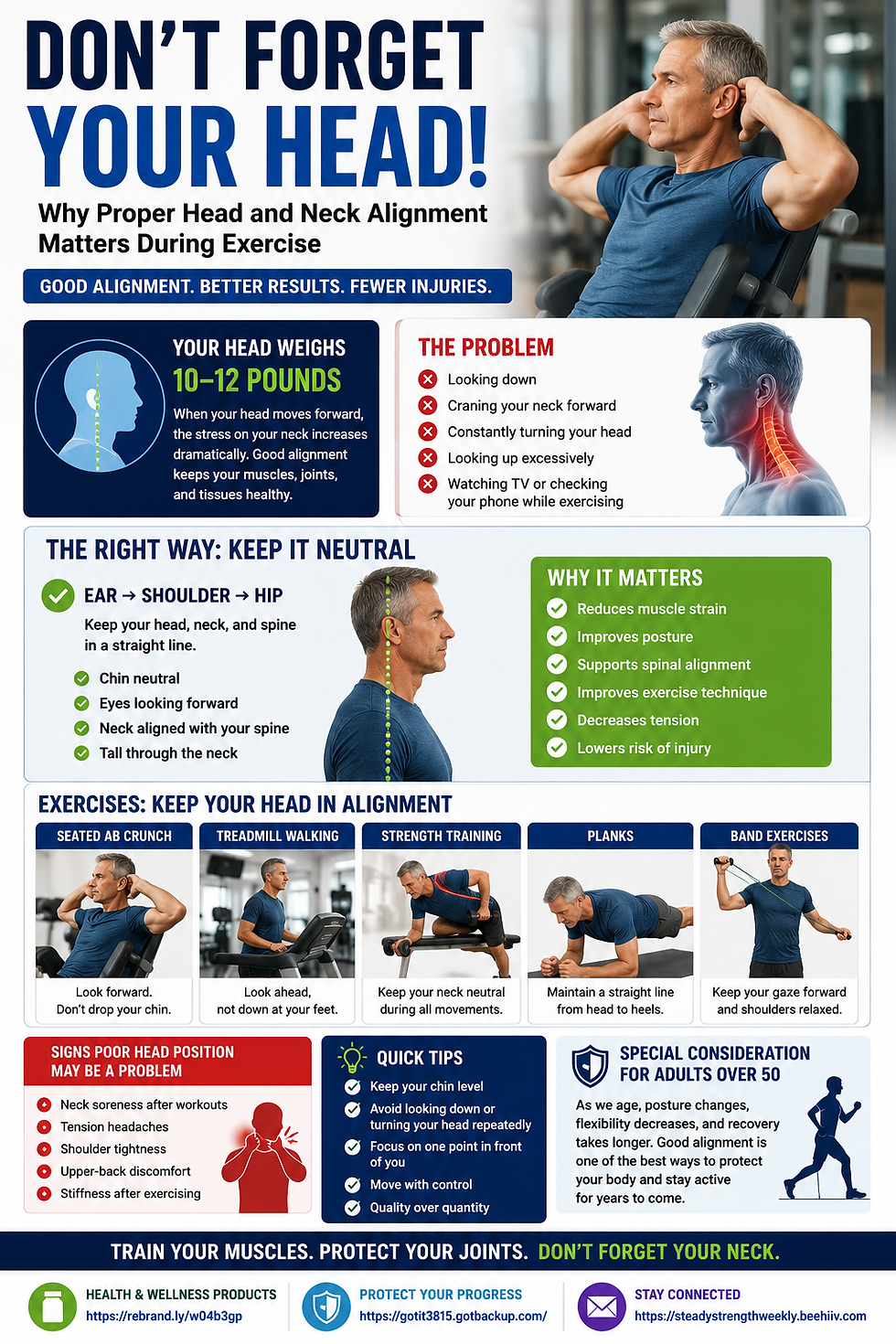
Your head and neck. As an ISSA Certified Specialist in Senior Fitness, one thing I've learned is that proper alignment matters—and that includes your head and neck.
The Common Mistake
Watch people exercising at the gym and you'll often see:
looking down at the floor
craning the neck forward
constantly turning the head
looking up excessively
watching TV while exercising
checking a phone between repetitions
These habits may seem harmless. Over time, however, they can place unnecessary stress on muscles, joints, ligaments, and soft tissues.
Your Head Is Heavier Than You Think
The average human head weighs approximately:
10–12 pounds
When your head is properly aligned over your shoulders, the neck muscles work efficiently. But when your head moves forward? The stress increases dramatically. A forward head position can make your neck feel like it's supporting much more weight.
Why Proper Alignment Matters
Good head and neck positioning helps:
✔ reduce muscle strain
✔ improve posture
✔ support spinal alignment
✔ improve exercise technique
✔ reduce unnecessary tension
✔ decrease the risk of overuse injuries
The Seated Abdominal Crunch Example
One exercise where this often becomes a problem is the seated abdominal crunch machine.
Many people:
drop their chin excessively
look down toward their lap
round their neck forward
The goal of the exercise is to work the abdominal muscles—not the neck.
Better Technique
Keep:
✔ your chin neutral
✔ your eyes looking forward
✔ your neck aligned with your spine
Think:
"Tall through the neck."
Your head should move naturally with the exercise—not lead the movement.
Other Exercises Where Alignment Matters
Treadmill Walking
Avoid constantly looking down at your feet.
Look ahead instead.
Strength Training
Keep the neck neutral during:
rows
chest presses
shoulder exercises
machine work
Planks
Don't let your head hang down.
Don't crank your neck upward.
Maintain a straight line from head to heels.
Resistance Band Exercises
Keep your gaze forward and your shoulders relaxed.
Signs Your Head Position May Be Causing Problems
You may want to evaluate your form if you experience:
neck soreness after workouts
tension headaches
shoulder tightness
upper-back discomfort
stiffness after exercising
Sometimes the problem isn't the exercise.
It's the positioning.
A Simple Rule of Thumb
Imagine a straight line running through:
Ear → Shoulder → Hip
In many exercises, this is a good starting point for proper alignment.
What About Looking Around?
Let's be honest.
We've all done it.
Sometimes we're:
watching TV
checking the gym crowd
looking at the clock
seeing who's walking in
Occasional glances aren't a problem.
But repeatedly twisting your neck during exercise can create unnecessary strain.
Special Considerations for Adults Over 50
As we age:
posture often changes
flexibility may decrease
arthritis becomes more common
recovery takes longer
Good alignment becomes even more important.
The goal isn't just exercise.
The goal is exercising safely.
Final Thought
The next time you work out, pay attention to something you may have never thought about before:
Where is your head?
A properly aligned head and neck can help improve posture, reduce discomfort, and make your workouts safer and more effective.
Remember:
Train your muscles. Protect your joints. Don't forget your neck.
Your future self will thank you.
Related Articles
How to Avoid the Over-50 Caveman Posture
Exercises Men Over 50 May Want to Reconsider
10 Essential Stretches Every Man Over 50 Should Be Doing
Muscle Soreness vs. Pain: Know the Difference
🔗 Recommended Resources
💪 Health & Wellness Productshttps://rebrand.ly/w04b3gp
🔒 Protect Your Progresshttps://gotit3815.gotbackup.com/
📧 Stay Connected & Get More Fitness Tipshttps://steadystrengthweekly.beehiiv.com


Comments