Why It Takes Minutes to Eat 1,000 Calories but Hours to Burn Them
- Ulysses McDowell
- Mar 16
- 2 min read

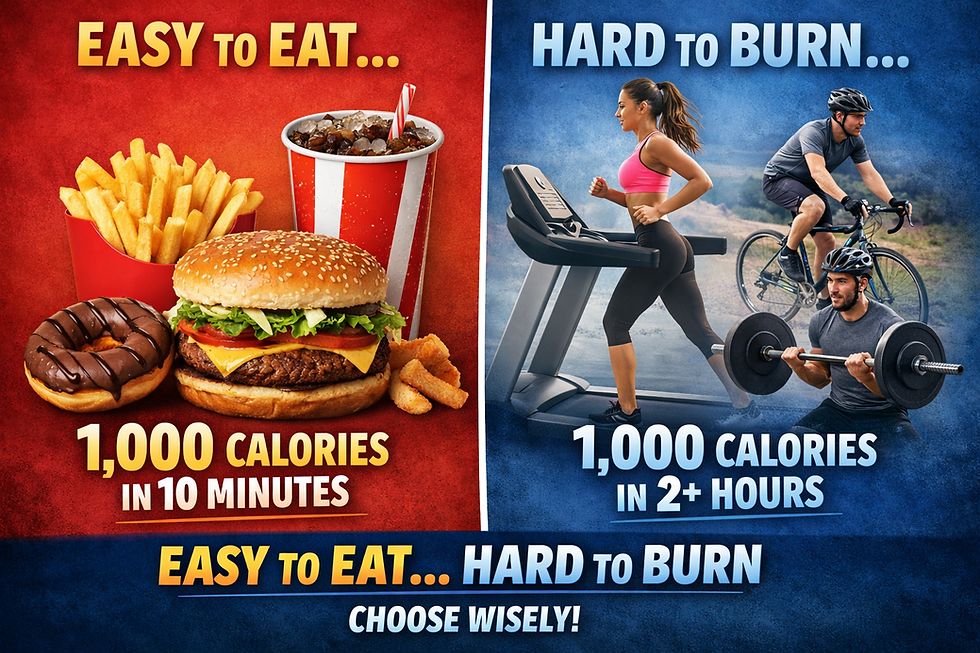
Have you ever noticed how easy it is to consume a thousand calories—but incredibly difficult to burn the same amount? You can sit down with a burger, fries, and a soda and easily consume over 1,000 calories in less than 10 minutes. But burning those same calories might require an hour or more of hard exercise.
That imbalance is one of the biggest challenges people face when trying to maintain a healthy weight. Let’s take a closer look at why.
Modern Food Is Designed to Be Easy to Eat
Many foods today are highly processed and packed with calories. They are engineered to taste great and go down quickly.
Examples:
Cheeseburger: ~300–500 calories
Large fries: ~400–500 calories
Soda: ~200–300 calories
Total: 1,000+ calories in one meal
Because these foods are soft, salty, sweet, and convenient, we can eat them very quickly without feeling full right away.
The Body Burns Calories Slowly
Burning calories requires movement, effort, and time. The body simply doesn’t burn energy nearly as fast as we can consume it.
Approximate calories burned per hour:
Walking: 200–300 calories
Golf (walking): 300–400 calories
Weight training: 300–500 calories
Running: 600–800 calories
That means burning 1,000 calories could take two to four hours depending on the activity.
Your Body Is Designed to Store Energy
From a survival standpoint, the human body is very efficient at storing calories as energy.
Thousands of years ago food was scarce, so the body learned to:
Store extra calories as fat
Burn energy slowly to survive longer periods without food
Today food is everywhere, but our bodies still operate the same way.
Liquid Calories Are Even Easier to Overconsume
One of the fastest ways to add hundreds of calories is through drinks.
Examples:
Soda
Sweet tea
Fancy coffee drinks
Milkshakes
Alcohol
You can drink 500–800 calories in minutes and still feel hungry afterward.
Small Daily Habits Make a Big Difference
Because calories are easy to consume but harder to burn, the key is building daily habits that keep things balanced.
Helpful habits include:
Drinking more water instead of sugary drinks
Eating whole foods instead of ultra-processed snacks
Staying active throughout the day
Strength training to maintain muscle
Watching portion sizes
You don’t have to be perfect. But small consistent choices add up over time.
A Lesson in Discipline
Maintaining health often comes down to a simple truth: it’s easier to eat than it is to burn. That’s why discipline matters.
Just like other areas of life—finances, faith, or relationships—the results we want usually require consistent effort, not quick fixes.
Taking care of your body is an investment that pays off over a lifetime.
Final Thought
Next time you reach for a quick snack, remember this simple reality:
It may take five minutes to eat the calories… but it could take hours to burn them.
Making wiser choices today can save you a lot of effort tomorrow.
Resources


Comments